Federal agencies continue to warn of sustained high risks through the end of the year, fueled by domestic violent extremists and foreign influences. A new law-enforcement-sensitive Joint Intelligence Bulletin issued by DHS, the FBI, and NCTC carries a familiar theme: lone offenders—including those inspired by foreign terrorist organizations like ISIS and al-Qaida as well as by domestic ideologies—pose the most likely threat to soft targets such as houses of worship, outdoor markets, parades, and large gatherings during the winter holidays.
The bulletin highlights disruptions such as the ISIS-linked plot foiled in Michigan over Halloween, alongside past tragedies including the New Year’s Day vehicle ramming and attempted bombing in New Orleans that killed 14 and injured 57; the 2022 machete assault on New York police during New Year’s Eve; and the 2019 Hanukkah stabbing in Monsey, New York.
Since the Israel-Hamas conflict began, fake bomb threats against Jewish institutions in the U.S. have surged. Propaganda from groups like al-Qaida in the Arabian Peninsula (AQAP) continues to call for attacks on Christians and Jews. FBI reporting indicates a double-digit rise in investigations into domestic extremists since February, driven by election frustrations and rising antisemitism.
Add to this the November 27 shooting of two National Guard soldiers in Washington, DC, by an Afghan national, and the arrest this week of three other Afghanis with ties to terrorism, and it’s clear why multiple former CIA officials are sounding alarms about potential domestic al-Qaida operations. Think tanks such as the Center for Strategic and International Studies emphasize that homegrown threats are now more lethal than ever.
Carols, Lights, and Diversity Bollards
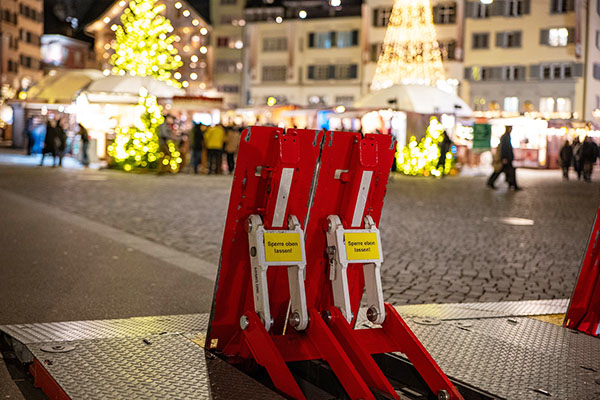
In Europe, the situation is equally troubling, with EU officials flagging a “huge risk” from radical Islamists. Germany’s ongoing trial for the 2024 Magdeburg Christmas market attack—in which a Saudi national killed six people and injured more than 300—has led to the cancellation of some holiday celebrations, the installation of costly countermeasures (see image above), and a growing backlash among far-right groups.
Authorities acknowledge a persistent threat to European Christmas markets from vehicle rammings, stabbings, and shootings, often linked to Islamist extremism. Although no major attacks have occurred at 2025 markets as of December 5, several minor incidents and heightened security measures underscore the ongoing concerns.
France is currently at its highest terror threat level, designated “Attack Emergency” (“urgence attentat”) under the Vigipirate security plan. On Wednesday, Interior Minister Laurent Nuñez ordered state officials to treat festive gatherings as high-risk targets and warned of a “very high” terror threat.
Late this week, the French government announced that it had canceled its iconic New Year’s Eve concert on the Champs-Élysées due to serious security concerns about managing massive crowds, with police resources stretched thin and terror threats deemed too significant.
The overall picture for this holiday season is clear:
The threat environment remains elevated but diffuse. There is no single, specific plot driving these warnings. Instead, authorities are focused on lone offenders and small cells using simple, hard-to-detect tactics against symbolic and crowded venues.
For the public, that means the risk is real but not a reason for panic. Law enforcement at every level is on heightened alert, security is being significantly strengthened at holiday events across the U.S. and Europe, and intelligence agencies are actively tracking both foreign propaganda and domestic radicalization.
|