Governments in more than 20 countries have recently reinforced public advice for households to keep several days of emergency food, water, and basic supplies on-hand. The recommended periods of self-sufficiency range from three to ten days, aimed at bridging short-term disruptions before outside assistance arrives.
Household Guidance
The UK launched its “Be Ready” campaign on Oct 22, calling for three days of non-perishable food, roughly three liters of drinking water per person per day, a torch, wind-up or battery radio, power bank, medicines, and cash. Japan is preparing a nationwide appeal on Nov 2 to coincide with the opening of a new Disaster Management Agency. Its existing government guidance urges at least three days' supplies and ideally a week's worth.
Germany's civil protection office recommends households ideally prepare for up to ten days. Sweden and Norway advise roughly a week of self-sufficiency, including for crisis or war scenarios. France, the Netherlands, Canada, Finland, and others align nearer the 72-hour mark. Here in the U.S., DHS's Ready.gov emergency supply guidance calls for at least three days of food and water. Additional countries with national preparedness guidance include Ireland, Denmark, Estonia, Switzerland, Taiwan, and others.
Recommended Periods
The publicly shared rationale is multi-layered resilience. Officials cite extreme weather disasters, cyberattacks, prolonged infrastructure failures, and geopolitical tensions or hybrid threats that could interrupt supply chains. In parts of Northern and Eastern Europe, the advice also reflects the regional security environment. Nordic countries have treated household preparedness as ordinary policy for years; the current wave is notable for broader alignment and intensified public messaging. The European Commission's Preparedness Union Strategy, adopted in March 2025, has encouraged member states to promote at least 72 hours of household self-sufficiency as part of a whole-of-society approach.
Military Planning
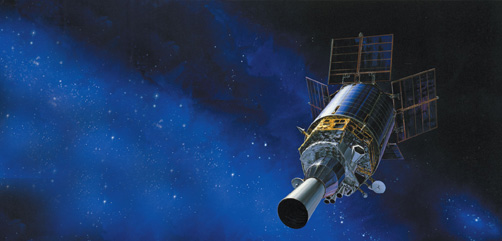
In the United States, this civilian advice coexists with a far more ambitious military effort. Defense Secretary Pete Hegseth unveiled FORTRESS America on Sept 30, an initiative intended to strengthen the resilience of U.S. military installations and critical defense capabilities. The acronym stands for Federal Operations for Resilience, Troop Resources, Energy, Supply, and Survivability. It rests on five pillars: energy independence, supply-chain and industrial-base resilience, a strategic defense reserve, installation hardening and cyber resilience, and space and spectrum resilience.
Internal planning documents reviewed by Fox News indicate that major continental U.S. bases would be expected to sustain essential operations such as power, water, fuel, and communications for at least 90 days without outside support, using microgrids, battery storage, and potentially even portable nuclear reactors. The focus is on keeping military forces operational if civilian grids or global supply chains fail in a major conflict, not on civilian households.
Broader Context
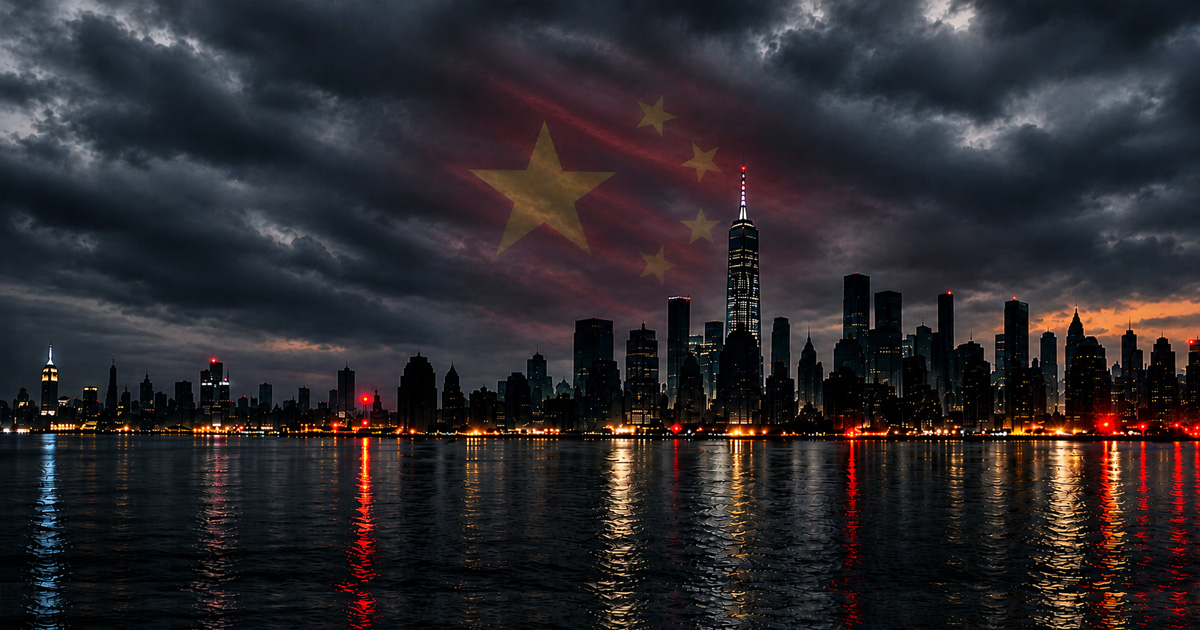
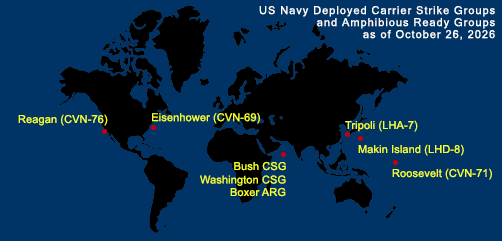
One additional factor that may be shaping the intensity of these campaigns, particularly the emphasis on cyber and infrastructure resilience, is the rising risk of conflict in the Western Pacific and the potential for spillover far beyond the region. U.S. Army Pacific Commander Gen. Ronald Clark recently stated that the Davidson window still remains valid, with his command preparing under the assumption that China could have the capacity, and possibly the intent, to seize Taiwan by force as early as 2027.
Any such clash would almost certainly open in the cyber domain, with Chinese doctrine prioritizing early disruption of power grids, communications, logistics, and financial systems. Those same networks are deeply interconnected with European infrastructure and supply chains. A major Indo-Pacific conflict would almost certainly pull in European nations through economic shock, hybrid spillover, or alliance obligations.
Taiwan produces the majority of the world's most advanced semiconductors; a blockade or war would immediately threaten European industry and defense production. Shipping lanes, energy markets, and undersea cables would also be at risk. North Korean missile activity adds further regional volatility.
European governments already coordinating around the Preparedness Union Strategy have clear incentives to raise baseline civilian resilience against cascading disruptions, including those that could arise from a Pacific conflict, even if most would not send combat forces. While the preparedness campaigns are not publicly attributed to a specific Taiwan contingency, their emphasis on infrastructure protection and societal resilience is in line with preparations for crises whose consequences could extend across multiple continents.
The overall message is consistent across borders: modern societies depend on fragile systems, and modest household preparedness reduces pressure on those systems when they fail. Three to ten days of water, shelf-stable food, medicine, and a radio covers the bulk of official recommendations. These campaigns are framed as practical insurance, not predictions of imminent catastrophe. |