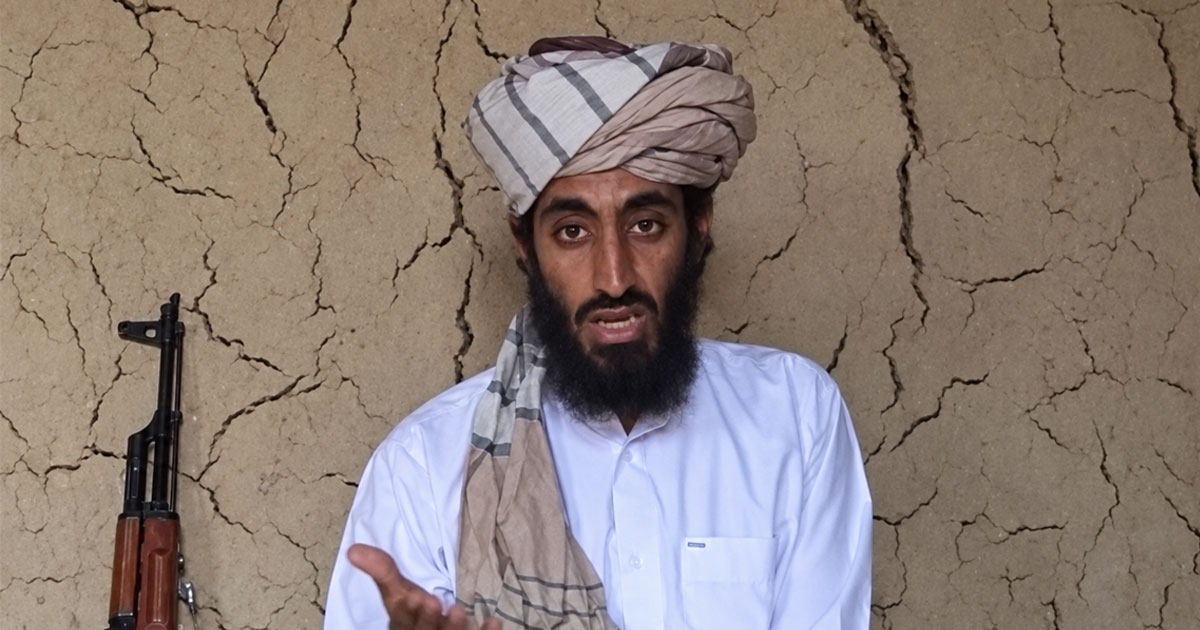
On Thursday, September 10, Al-Qaeda’s official media arm, al-Sahab, released a 52-minute commemorative video marking the twenty-fifth anniversary of the September 11, 2001 attacks and the murder of nearly 3,000 people on American soil.
Titled “A Quarter of a Century Since Nine Eleven,” the video combines archival footage of the attacks, ideological messaging, recruitment appeals, and appearances by a man al-Qaeda identifies as Hamza bin Laden, the son of Osama bin Laden.
Is Hamza bin Laden Still Alive?
The appearance raises an immediate question: Is Hamza bin Laden actually alive?
The official U.S. position remains that he was killed in a counterterrorism operation in the Afghanistan-Pakistan region. President Donald Trump announced his death on September 14, 2019.
Former CIA targeter Sarah Adams, however, has consistently argued that Hamza is still alive. She maintains the 2019 U.S. announcement was wrong, says she has seen more recent photographs of him, and describes him as the current emir of Al-Qaeda, operating from Afghanistan with Taliban and Haqqani protection and involved in planning new strikes against the U.S. homeland.
The new video does not settle the question. There is no publicly verified recording date for the footage. It could be recent, archival, or deliberately released now to create uncertainty. But al-Qaeda appears to want its audience to believe Hamza is alive and relevant.
Why the Bin Laden Name Still Matters
That matters because Hamza offers something al-Qaeda badly needs: the bin Laden name.
The video reportedly presents him in imagery reminiscent of his father, including traditional clothing, an Afghan-style setting, and a rifle nearby. Osama bin Laden remains al-Qaeda’s most recognizable symbol, and Hamza provides an obvious way to reconnect the organization with its founding mythology.
At the same time, the production reportedly draws on the writings of Saif al-Adel, widely regarded as al-Qaeda’s de facto leader. Al-Adel is a former Egyptian special forces officer and a first-generation Al-Qaeda figure. The FBI identifies al-Adel as a senior al-Qaeda leader based in Iran and links him to the 1998 U.S. embassy bombings in Kenya and Tanzania.
The formula is significant: al-Adel provides strategic continuity; Hamza provides the bloodline and emotional connection.
Recruitment, Endurance, and Attrition
The video also pushes familiar al-Qaeda themes of recruitment, endurance, and economic attrition. It references Washington, London, and Tel Aviv while portraying jihad as an expanding global struggle, reinforcing hostile intent and recruitment messaging.
Afghanistan is central to that narrative. Al-Qaeda portrays the Taliban’s return to power as proof that patience can defeat a stronger enemy. The lesson for recruits is simple: survive long enough, keep fighting, and eventually the adversary will leave.
That interpretation ignores the enormous losses al-Qaeda suffered over the past quarter-century, but propaganda relies on selective history. Afghanistan allows the organization to argue that endurance can outlast overwhelming military power.
The Economics of Terror
The video revisits September 11 not only as a terrorist attack, but as an effort to force the United States into costly responses. The 9/11 Commission estimated that the plot itself cost approximately $500,000. Now consider how much national treasure and blood has been spent over the last 25 years in response. That number is in the trillions.
Al-Qaeda’s message is straightforward: relatively inexpensive terrorist operations can force far more powerful nations to spend vastly greater sums defending themselves, conducting military operations, and securing infrastructure.
That concept of economic attrition has long been central to al-Qaeda’s thinking.
Neither Panic Nor Dismissal
The correct takeaway is neither panic nor dismissal.
The video does not prove Hamza bin Laden is alive, nor does it provide evidence of an imminent September 11-scale attack. But it does show what al-Qaeda wants the world to see: a movement that has survived, preserved its ideology, and found a way to reconnect the bin Laden legacy with a new generation.
That propaganda effort deserves close attention from security professionals today.
A Warning About What May Come Next
As a closing note, Sarah Adams has issued specific public warnings that Al-Qaeda is planning another major attack on the U.S. homeland. She claims Hamza bin Laden is directing a multi-pronged plot involving bombs aboard commercial airliners, a siege in Washington, and October 7-style urban assaults on soft targets.
Podcaster Shawn Ryan has repeatedly platformed her claims. Retired Green Beret Scott Mann, who helped form an underground network to rescue Afghan allies during the 2021 withdrawal, has also worked with Adams on the threat picture she describes. The collaborative book The Gathering Storm was written to educate people at the state and local level about the threat and how to mitigate it.
A Disputed Threat Picture
Afghan resistance leader Ahmad Massoud also warns that Taliban-controlled Afghanistan again enables Al-Qaeda planning against the West. Former Afghan intelligence chief Amrullah Saleh has likewise warned about the revival of terrorist sanctuary there.
All of these voices argue that official intelligence community assessments understate an active threat.
That does not make every warning correct or every detail publicly verifiable. But the new video, Hamza bin Laden’s reappearance in propaganda, Saif al-Adel’s continued role, and warnings from former intelligence and military figures are reasons to watch closely what al-Qaeda is saying, signaling, and possibly rebuilding.
|